
How to Copyright a Song: A Step-by-Step Guide
9 March 2025
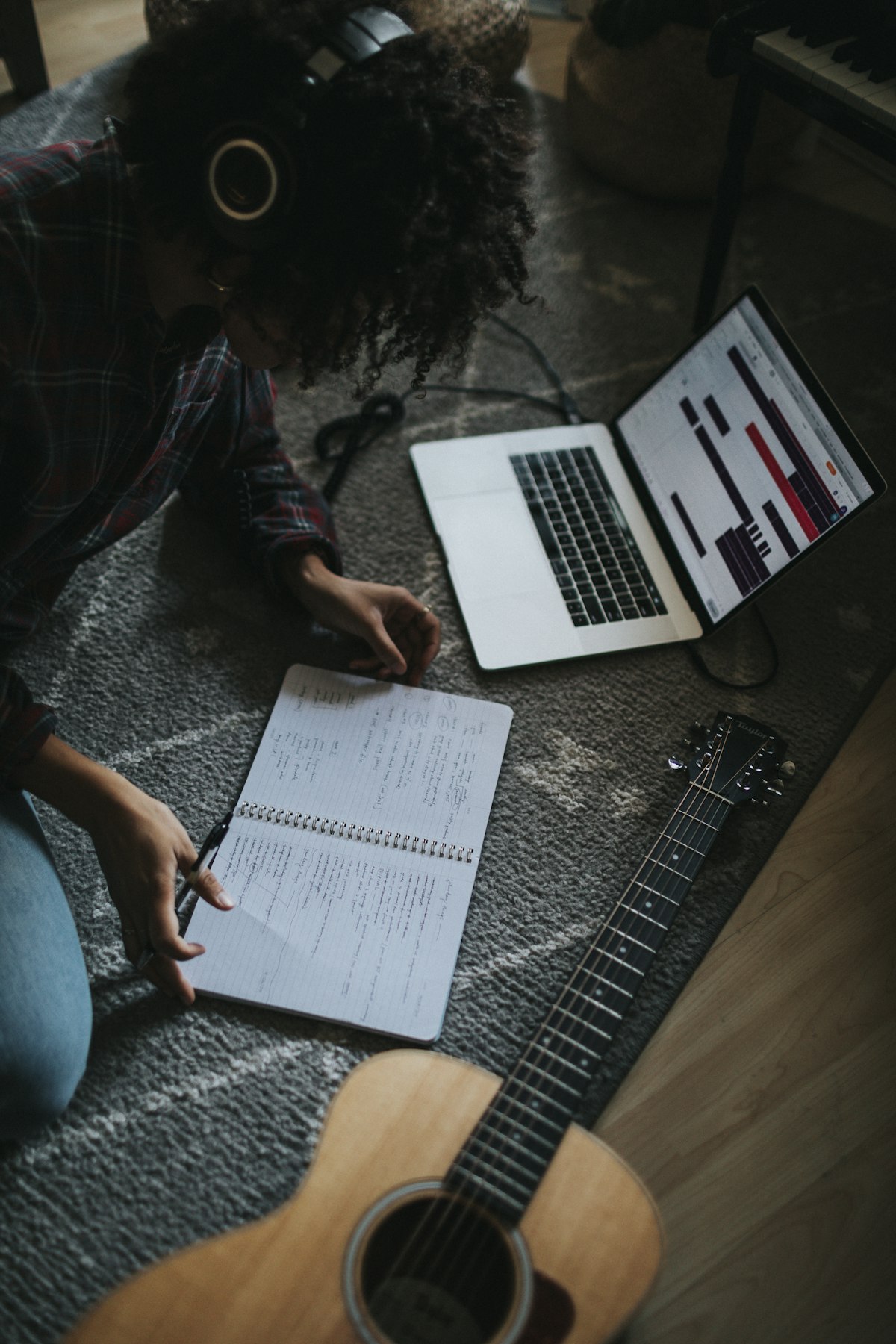
Every songwriter eventually asks the same question: do I actually need to "do" anything to copyright my song, or is it already protected the moment I write it? The honest answer is a bit of both — and understanding the difference can save you from a costly dispute down the line.
Your Song Is Protected the Moment You Create It
Under the Berne Convention, copyright exists automatically the second a song is "fixed" in a tangible form — recorded, written down, or saved as a file. You don't need to register anything for copyright to legally exist. If you wrote it, you own it.
The real challenge isn't whether you own the copyright. It's whether you can prove it if someone else claims the song, samples it without permission, or a dispute ends up in front of a label, a publisher, or a court.
Step 1: Fix Your Song in a Tangible Form
Copyright doesn't apply to an idea floating in your head — it applies once the song exists as a recording, a lyric sheet, a demo, or a notated score. As soon as you've written a verse, hummed a melody into your phone, or laid down a rough beat, that version is protected.
This is also the moment to start building your evidence trail. The earlier you can prove a date of creation, the stronger your position in any future dispute.
Step 2: Timestamp Your Work Before You Share It
This is the step most songwriters skip — and it's the one that matters most in practice. Once you've finished a draft, demo, or final mix, get an independent, timestamped record of it before you pitch it to a label, post it online, or send it to a collaborator.
A timestamped certificate works by creating a SHA-256 hash of your file and recording the exact date and time it was uploaded. That hash is unique to your file — change a single note or word and the hash changes completely. This gives you independently verifiable proof that your song existed in that exact form on that exact date, which is exactly the kind of evidence used to resolve music theft disputes.
Unlike a registration that can take weeks, a timestamped certificate is generated in minutes and never expires.
Step 3: Register With Your National Copyright Office (If You Want To)
In countries like the US, formal registration with a government body (such as the US Copyright Office) gives you additional legal benefits — for example, the ability to sue for statutory damages in US federal court. Registration usually involves a fee, a waiting period, and submitting a copy of the work.
This step isn't required to own copyright, and in many countries it doesn't exist at all. But if you're based in or releasing music in a jurisdiction where formal registration adds legal teeth, it's worth doing alongside — not instead of — a timestamped certificate, since the certificate covers you immediately while registration is processing.
Step 4: Keep Records of Every Version
Songs evolve. A demo becomes a final mix, a co-writer adds a bridge, a producer reworks the arrangement. Each meaningful version is worth timestamping separately, especially if you're co-writing with someone else and want a clear record of who contributed what, and when.
This is particularly important if you're pitching the same song to multiple labels or producers — a paper trail of dated versions makes it much harder for anyone to argue they came up with it independently.
Step 5: Register With a PRO and Collection Society
Performance Rights Organisations (PROs) like PRS, ASCAP, or BMI don't establish copyright ownership, but they do track performances and collect royalties on your behalf. You'll typically need to register your song with them once it's been recorded or is being performed publicly. This is a separate process from copyright protection itself, but it's a necessary one if you want to get paid when your song is played on the radio, streamed, or performed live.
Common Mistakes Songwriters Make
A few habits create unnecessary risk even when a songwriter's intentions are good:
- Sharing a "rough idea" voice memo widely before timestamping it. Even unfinished demos can be the version someone else hears, copies, or claims independently came to them.
- Assuming a streaming upload date counts as proof of creation. Platforms log when content was published, not necessarily when it was written, and they aren't designed to serve as legal evidence in a dispute.
- Relying only on email timestamps. Sending a demo to a friend or collaborator via email can help, but email metadata is comparatively easy to dispute or fake compared to a cryptographically hashed, independently issued certificate.
- Waiting until a dispute happens to think about evidence. By the time a conflict arises, it's too late to create proof retroactively — the certificate needs to predate the dispute to be useful.
Avoiding these mistakes is mostly a matter of building a simple habit: timestamp first, share second.
Why Timestamping Matters More Than Most Songwriters Realise
Copyright disputes rarely come down to "who owns this song" in the abstract — they come down to "who can prove they had it first." If two songwriters claim the same melody, or a producer's beat turns up in someone else's track without credit, the dispute is settled by evidence of dates, not by who shouts loudest.
This is increasingly relevant with AI tools scraping and training on uploaded music without permission — a timestamped certificate created before you publish gives you a documented record predating any AI training claim, which is covered in more detail in our guide to AI and copyright.
Protect Your Song Before You Share It
The safest habit is simple: timestamp every song, demo, or beat before you send it anywhere — before the pitch meeting, before the upload, before the collaboration. It takes under two minutes, costs very little, and gives you a certificate that's valid in 181 countries under the Berne Convention.
Register with Copyright Solved now to start your protection journey.